FAQ

Here’s our list of Frequently Asked Questions. If you don’t find the answer you’re looking for, then don’t hesitate to contact us with your question at:info@fluidbook.com

1. What documents can be converted into a Fluidbook?

Whether it’s a catalogue, a magazine, a brochure, any printed document can be published in Fluidbook.
PDF is the format most often treated, but we can also transform files in, among others, InDesign, Illustrator and PowerPoint. Don’t hesitate to contact us for more information.

2. Can the documents mix text and images?

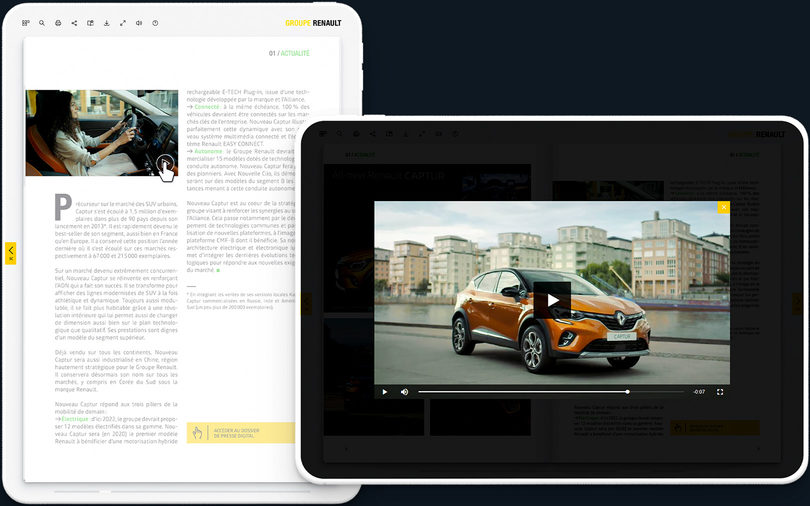
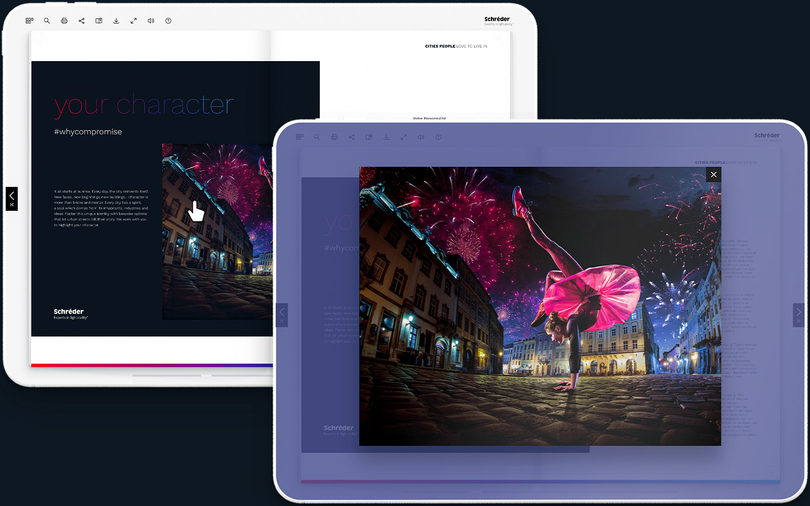
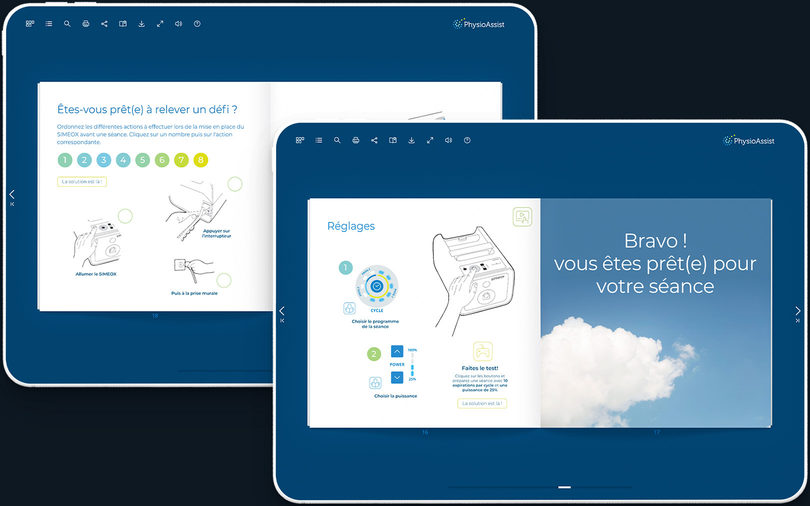
Of course, even videos, sound, animation and interactive elements, all in Flash.

3. Can I search for text within a Fluidbook?

Absolutely, you can search for a product within a catalogue or the article you’ve heard about in a magazine.

4. How does the zoom feature work?

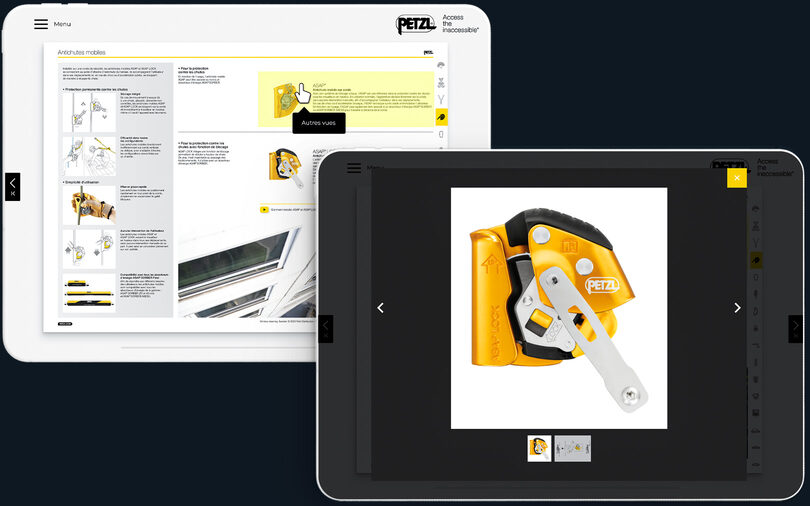
Fluidbook allows you to zoom in on all the contents, whatever they might be, by clicking directly on the page or by using the zoom buttons in the toolbar. It’s the most intuitive and most fluid zoom on the market. The maximum zoom level can be controlled according to your publication’s needs.

5. Is the quality affected adversely by the zoom?

The texts are in vector graphics, which means that the quality is always perfect, unlike the majority of our competitors.
Images are optimized according to the quality of the user’s Internet connection.

6. Is there a maximum number of pages?

No, there is no limit. Each page is loaded independently, so that the user consults the Fluidbook without waiting – regardless of the number of pages.

7. Can I put links into a Fluidbook?

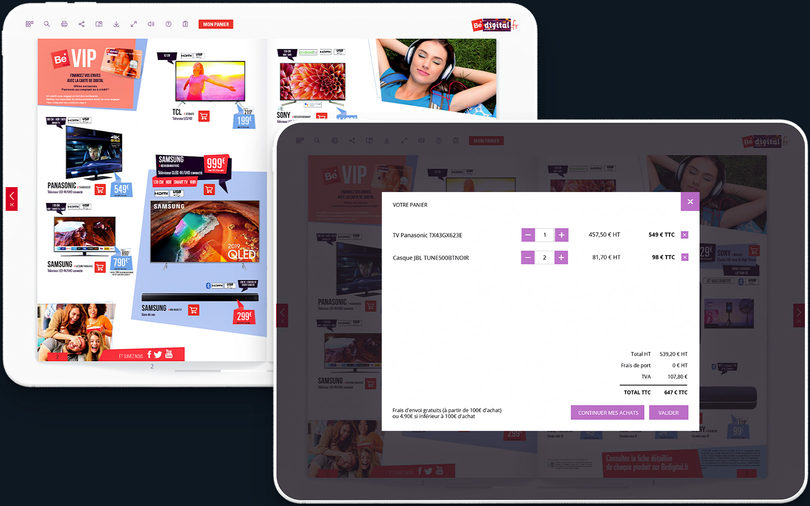
Yes, all types of links are possible: internal links (from one Fluidbook page to another), external links (to website pages or e-commerce products) or links to e-mail addresses.

8. Can everyone consult a Fluidbook?

Yes, from any computer connected to the Internet, whether it’s a Macintosh or a PC. Fluidbook uses Flash technology, which is currently installed on 98% of computers.
For the remaining 2%, Fluidbook offers automatic installation of a Flash Reader. Fluidbook is also available on CD-ROM, a useful additional sales tool for your travelling salesforce.

9. How can we use Fluidbook for our direct marketing?

Simply send an e-mail (or your newsletter) to your potential clients and place the link to your Fluidbook inside. Fluidbook works in a completely autonomous way and is perfectly suited for this type of marketing. Don’t hesitate to contact us to see how we can add value to your direct-marketing strategies.

10. Is Fluidbook adapted to newspapers?

Yes, newspapers even benefit from advantageous rates, which take into account repeat publication (daily, monthly, weekly, etc.) On top of which, Fluidbook has an integrated security system that can limit access to, say, only your subscribers. Don’t hesitate to contact us for a personalized estimate.

11. What about security?

Obviously, if your Fluidbook is a paying publication (e-book, newspaper, magazine) you don’t want it circulating freely on the Internet. We have put in place a secure-access option for this type of publication, which limits the readership to authorized persons (for example, subscribers or people buying a specific issue). We can also lock the PDF Export option so that the Fluidbook becomes impossible to save or distribute. The security of your publication is thus guaranteed.The security of your publication is thus guaranteed.

12. How much does a Fluidbook cost?

We offer four different packages, depending on the number of pages of your publication. Our offer includes all basic services, such as adapting the interface to your graphic identity or the insertion of clickable links in the pages. All specific extra requests, such as inserting games, videos, numerous links to an e-commerce site, will receive a separate estimate.

13. Where are Fluidbooks created?

Fluidbooks are completely created in France. Fluidbook is a product of Cubedesigners, a multimedia agency with offices in Paris and Montpellier. You can contact whichever agency suits you best.